
The International and Comparative Law Center, in cooperation with the Armenian Legal Center for Justice and Human Rights, has joined a coalition of Armenian and international human rights organizations in submitting a joint complaint-report to the United Nations. The submission calls for a review of potential conflicts of interest within the UN Working Group on Arbitrary Detention (WGAD), particularly in cases involving Armenian detainees.
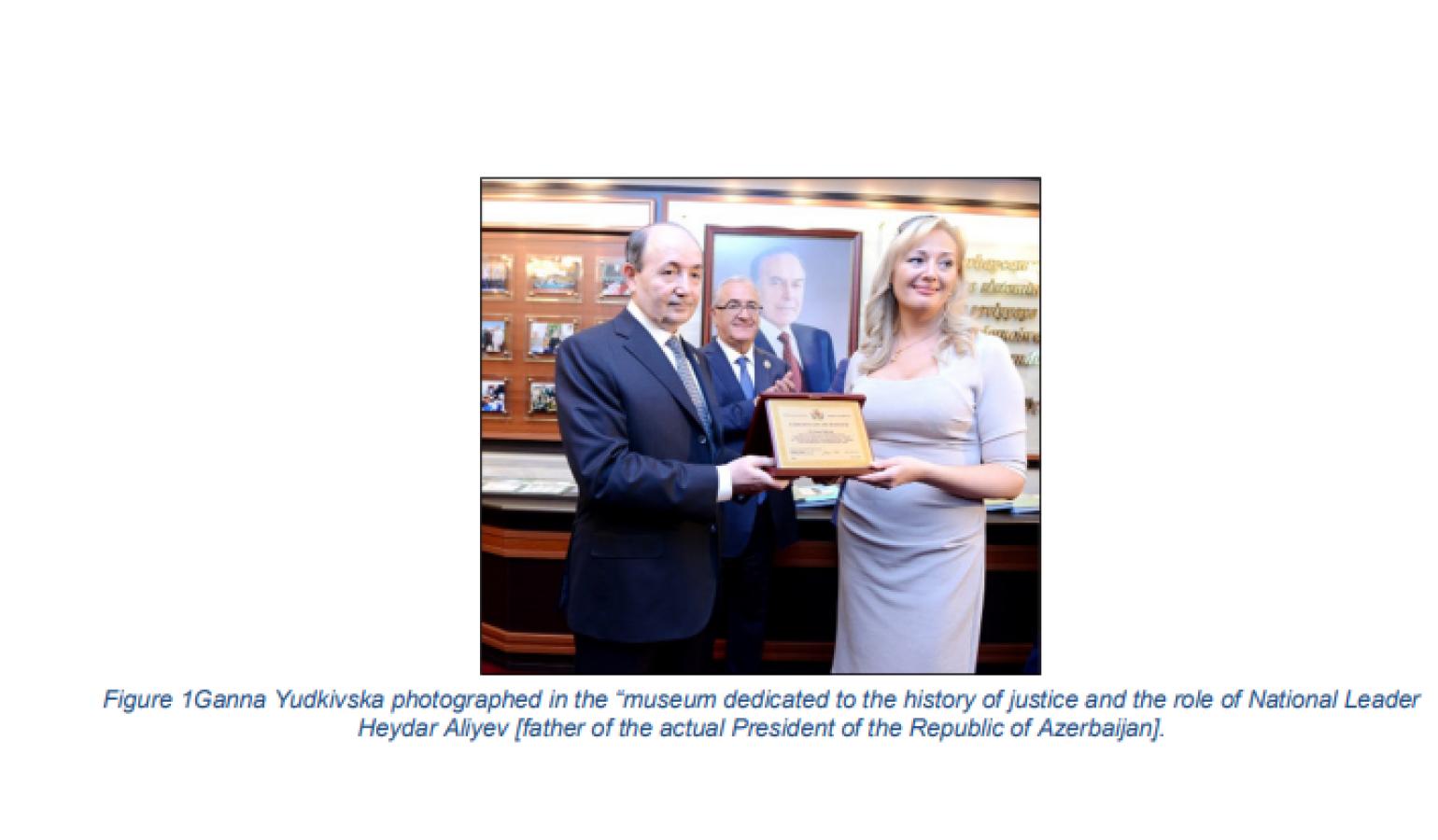
Addressed to the WGAD, the Coordination Committee of Special Procedures, and the President of the UN Human Rights Council, the formal complaint outlines a pattern of financial, political, and personal connections linking WGAD member Ganna Yudkivska to the Government of Azerbaijan, alongside a record of alleged ethical concerns. According to the detailed evidence presented, her participation in the case of Ruben Vardanyan is argued to be inconsistent with multiple UN standards, including the Code of Conduct for Special Procedures Mandate-holders.
The submission highlights several key areas of concern. First, it points to direct financial ties, noting that Yudkivska is a partner at Equity Law Firm, a Ukrainian legal practice that provides paid legal services to the State Oil Company of the Azerbaijan Republic (SOCAR), a major state-owned enterprise. It further raises concerns about potential political and personal bias, citing her husband, former Ukrainian politician Georgii Logvynskyi, who is said to maintain connections with Azerbaijan and has publicly supported Azerbaijan’s territorial claims over Nagorno-Karabakh, an issue directly linked to Vardanyan’s detention.
In addition, the report references a history of ethical controversies during Yudkivska’s tenure as a judge at the European Court of Human Rights (ECHR). These include allegations of rulings favoring organizations with which she had prior affiliations, the issuance of politically sensitive opinions perceived as favorable to Azerbaijan, and the use of judicial immunity in a manner that allegedly shielded her husband from an anti-corruption warrant issued by Ukraine’s National Anti-Corruption Bureau (NABU).
The coalition also points to what it characterizes as inconsistent recusal practices. While Yudkivska has reportedly recused herself from cases involving the Russian Federation due to her nationality and financial interests, she did not step aside in the Vardanyan case, despite his long-standing ties to Russia and Azerbaijan’s own framing of him as a “Russian envoy.”
Commenting on the issue, Artak Beglaryan, President of the Artsakh Union, emphasized that the credibility of UN human rights mechanisms depends on strict adherence to independence and impartiality. He argued that the alleged financial and political links in this case undermine the legitimacy of the WGAD’s opinion concerning Ruben Vardanyan, as well as any future assessments involving Armenian detainees, and called for immediate corrective action.
In light of these concerns, the coalition urges the United Nations to initiate a supervisory review into the alleged breaches of the Code of Conduct, require Yudkivska’s recusal from all WGAD cases involving Azerbaijan, and invalidate Opinion No. 46/2024. It further calls for the adoption of a new, impartial opinion in Vardanyan’s case to preserve the integrity of the WGAD’s procedures.
The coalition behind the submission brings together a broad group of Armenian and international organizations committed to advancing accountability, preventing atrocities, and protecting the rights of forcibly displaced populations from Artsakh (Nagorno-Karabakh).