
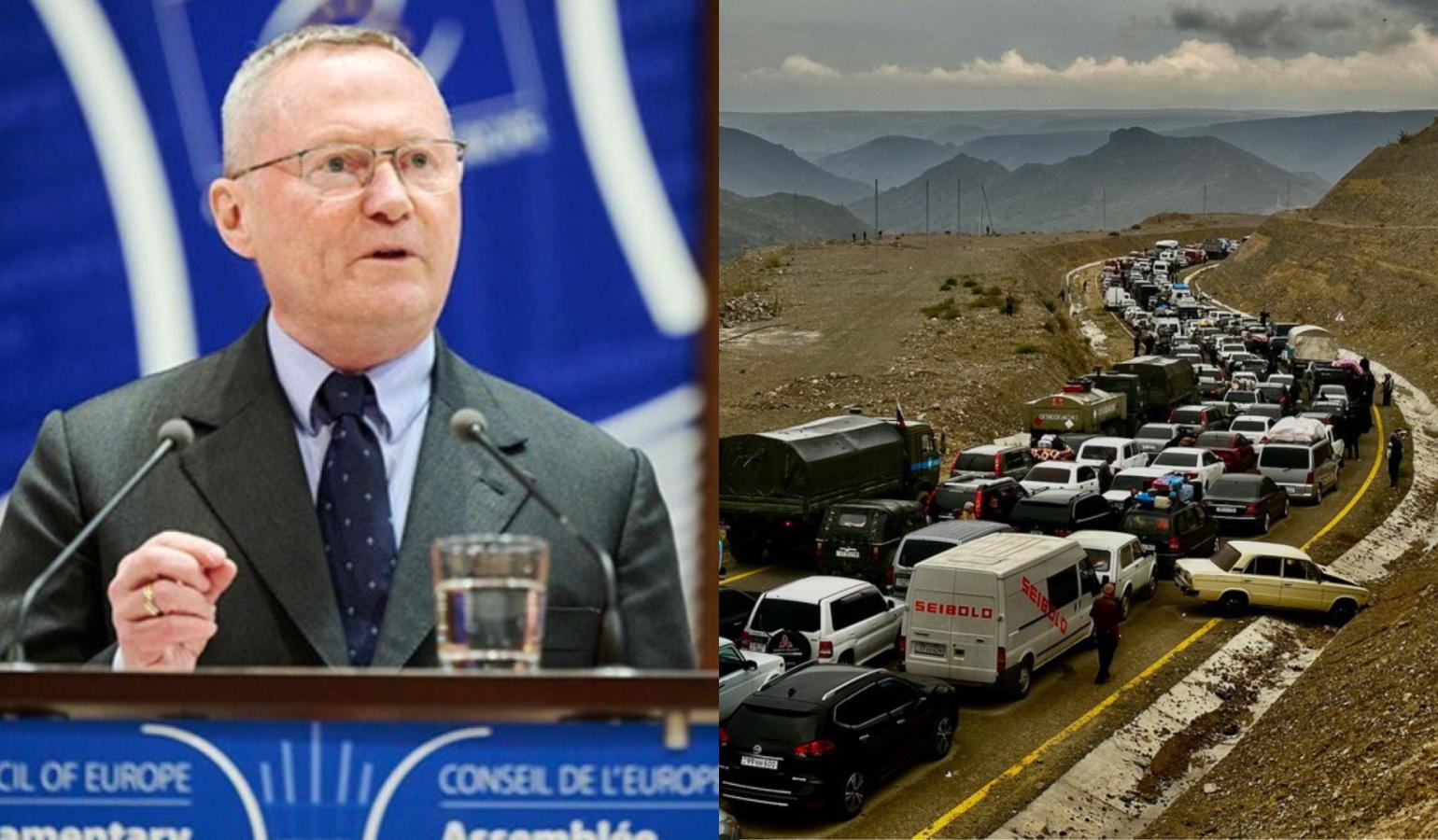
“Karabakh Armenians displaced to Armenia need continued support and integration,” stated the Council of Europe Commissioner for Human Rights, Michael O’Flaherty, in a published memorandum. In the memorandum, the Commissioner positively assessed the response of the Armenian authorities to the crisis caused by the displacement, noting that it is necessary to move from the phase of emergency assistance to the implementation of human rights-based and sustainable integration policies.
The memorandum highlighted a number of important measures implemented by Armenia, including efforts aimed at simplifying the process of acquiring Armenian citizenship, the introduction of special support programs, as well as the maintenance of temporary protection status for those individuals who have not yet obtained citizenship. It also referred to the ongoing housing support program, as well as initiatives promoting employment and entrepreneurship.
At the same time, the Commissioner noted that many forcibly displaced Armenians in Armenia continue to face obstacles to the full enjoyment of their rights. In particular, the absence of citizenship limits access to certain social rights and benefits, while difficulties related to the restoration of identity documents and other necessary documentation hinder access to pension security, employment, education, and housing programs. The memorandum also addressed the high cost of real estate in certain localities, which does not correspond to the level of support provided, especially in areas where more realistic employment opportunities exist.
The Commissioner emphasized the necessity of developing a comprehensive integration strategy, stressing that the effective participation and consultation of Karabakh Armenians must be ensured in the processes of formulating and implementing policies.
Particular attention was paid to the situation surrounding displaced women. The Commissioner noted that they may face heightened risks of gender-based violence, as well as additional social and economic difficulties related to caregiving responsibilities, marriage, and various forms of discrimination. In this context, the need to strengthen access to protection and support services is emphasized. “Women, especially those who are displaced and face multiple forms of discrimination, encounter greater difficulties in accessing support and protection mechanisms,” said the Commissioner.
The memorandum also states that the right to return to Nagorno-Karabakh continues to be of great importance for forcibly displaced Armenians. In the context of the ongoing peace process, the Commissioner called for ensuring that displaced persons are fully informed and receive the necessary support in order to make free and informed decisions regarding their future.
In the end, the Commissioner for Human Rights called on the international community to continue its support in order to facilitate the effective integration of forcibly displaced Armenians who have sought refuge in Armenia, as well as to preserve the progress achieved thus far.
The Council of Europe Commissioner for Human Rights was in Armenia several months ago. During the Commissioner’s stay in Armenia, the “Center for International and Comparative Law” maintained continuous contact with his office and also submitted a written report regarding the human rights and integration issues faced by persons forcibly displaced from Nagorno-Karabakh, as well as issues of discriminatory treatment against women engaged in civic and public activities.