
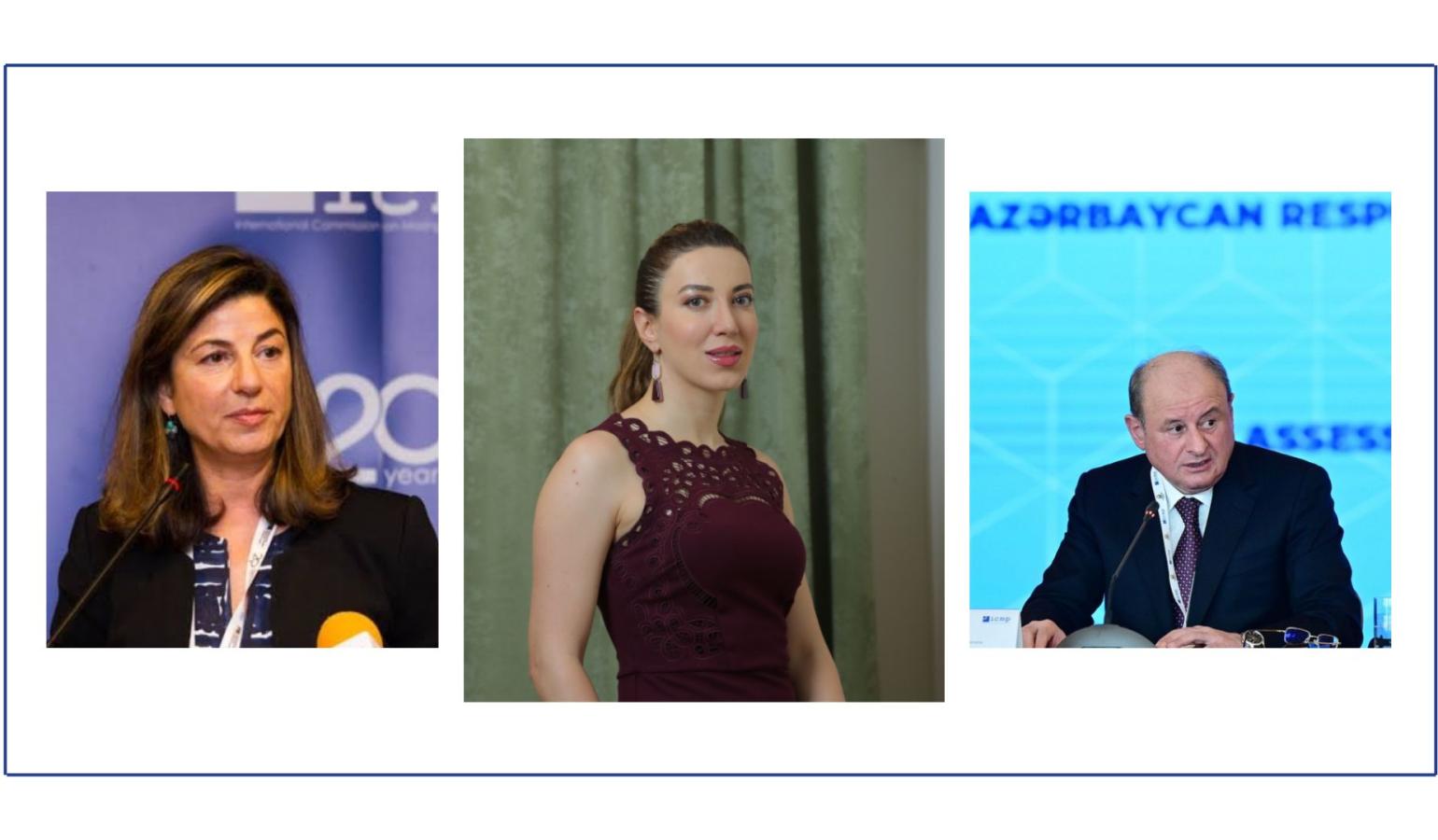
A database on missing persons will be established between Azerbaijan and Armenia, based on the cooperation model previously implemented in the former Yugoslavia. According to Azerbaijani sources, this was announced by Kathryne Bomberger, Director-General of the International Commission on Missing Persons, during a conference on missing persons held in Azerbaijan.
Within the same conference, Deputy Head of Azerbaijan's State Security Service, Sharafat Hasanov, stated that the system to be created will make it possible to consolidate the existing databases on missing persons into a single platform. Citizens of both Armenia and Azerbaijan will also be able to anonymously provide information about missing persons, including information regarding their possible burial sites.
"Without public trust and international involvement, any new mechanism may become a subject of political bargaining," said Siranush Sahakyan, Director of the International and Comparative Law Center, in an interview with Panorama, commenting on the above-mentioned statements.
According to the human rights defender, at first glance, this initiative is aimed at collecting information from those who possess relevant knowledge, and it appears that the state is attempting to act in good faith. However, the greatest challenge becomes credibility and trust. "If there is no international involvement and the issue remains solely within the scope of one side's capabilities, will this information be used objectively and effectively? Will the humanitarian problems of the families of the missing receive an immediate solution, or will the state, once armed with this information, continue to use these issues as a subject of political bargaining? That is simply unacceptable," said Sahakyan.
According to Sahakyan, in order to assess the level of trust, Azerbaijan's previous conduct must be taken into account, since the available videos and evidence are verifiable, and the party exercising control over the incidents could have established the truth long ago. "Through these incidents, we observe a policy of refusal and denial. In particular, when issues are uncovered that are related to crimes committed by Azerbaijani servicemen, the state attempts to conceal objective evidence and generate false evidence in order to evade state responsibility," noted Sahakyan.
According to the human rights defender, there are even cases where there is clear evidence that the body of an Armenian serviceman is in Azerbaijani possession, yet to this day they do not acknowledge that the serviceman was killed with the involvement of a particular group and refuse to return the body. "As long as such cases have not been investigated objectively, and the state has not demonstrated objective conduct to both societies, any new initiative cannot receive public support. And without public support, the outcomes will also not be acceptable to the victims of these humanitarian issues," said Sahakyan.
She stressed the importance of such an initiative, but noted that the state must first assume responsibility for the information already in its possession, establish the facts of the incidents that have occurred - even if they are related to crimes committed by Azerbaijani servicemen - and provide that information to the family members. Only then, for the purpose of filling the existing information gap, should this new mechanism be put into operation.