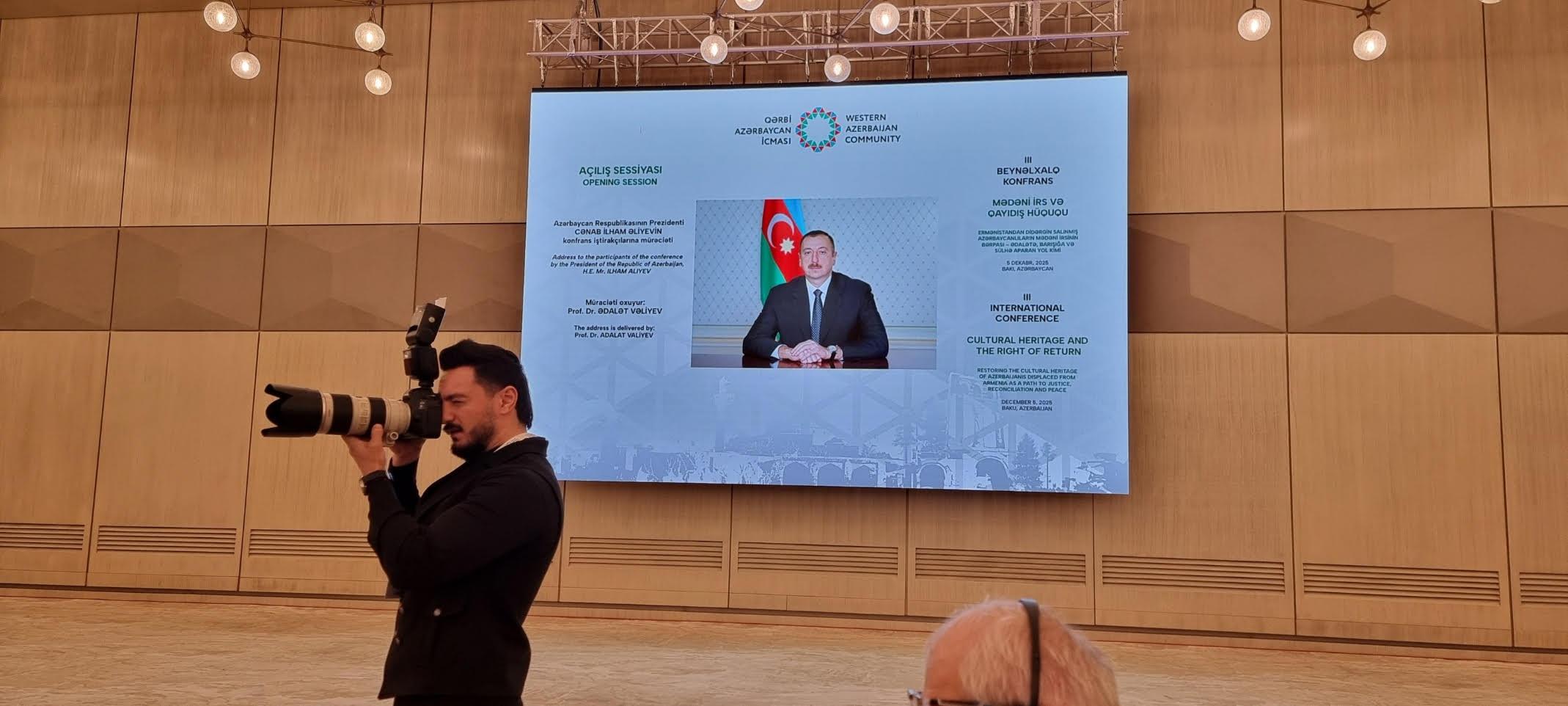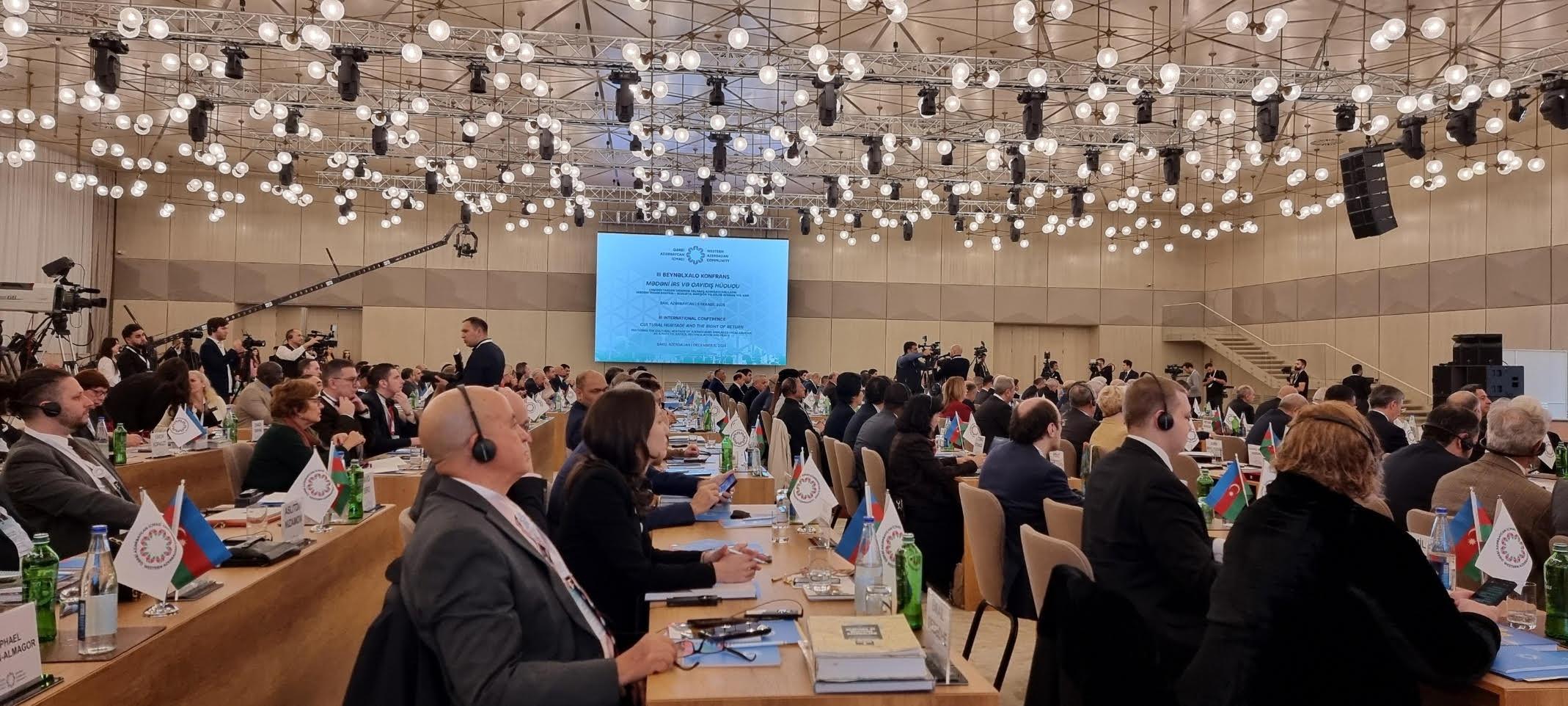
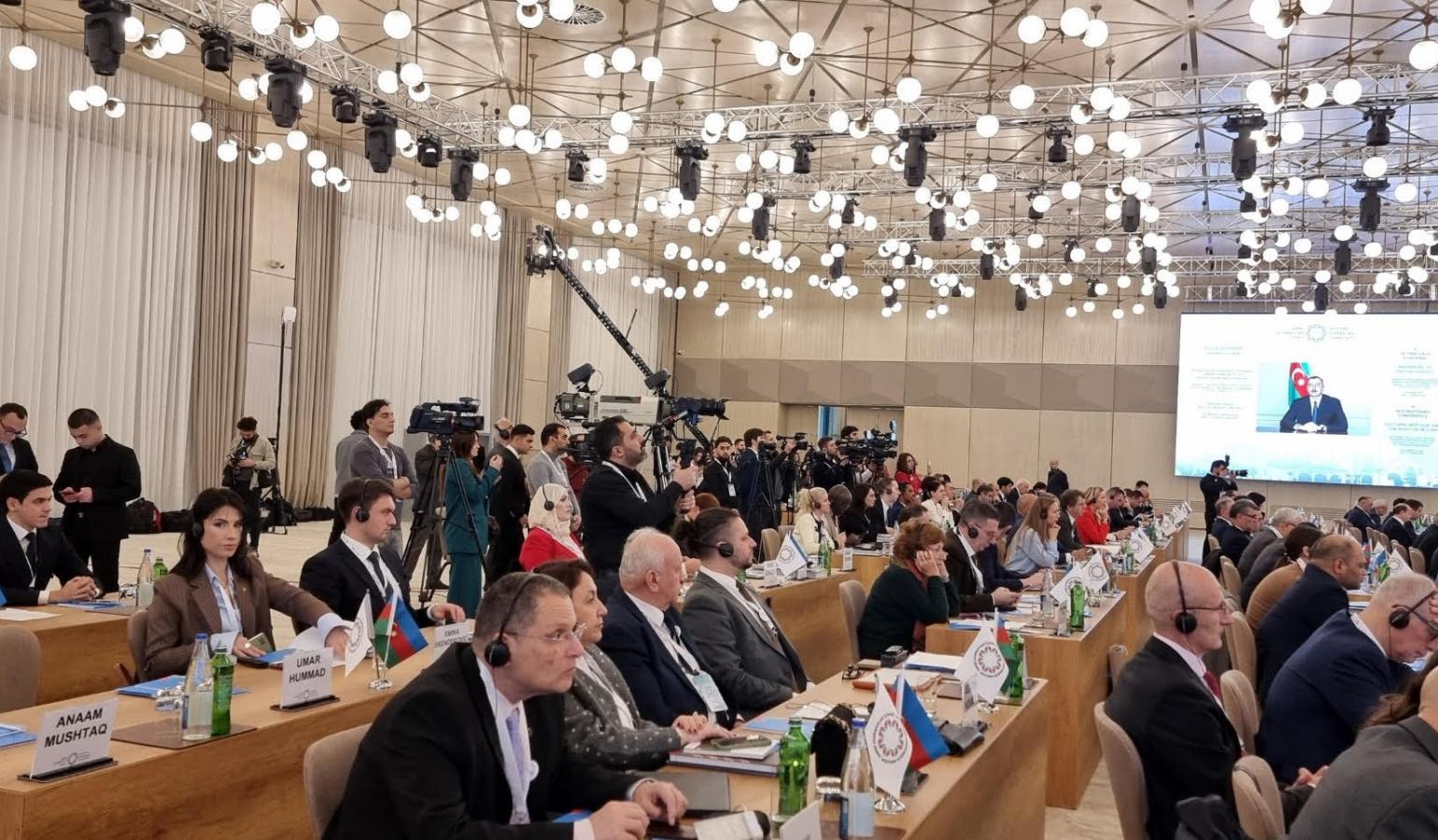
While the Armenian government speaks about an era of peace, Baku is promoting the thesis of “Western Azerbaijan.” From December 4 to 5, the 3rd international conference titled “Cultural Heritage and the Right of Return: The Restoration of the Cultural Heritage of Azerbaijanis Displaced from Armenia as a Path to Justice, Reconciliation, and Peace” was held in the Azerbaijani capital, where Aliyev accused Armenia of “destroying the rich tangible and intangible cultural heritage of Azerbaijanis living in Western Azerbaijan, including their sanctuaries and cemeteries, in an attempt to erase the traces of the Azerbaijani people from its territory.”
However, the facts show that the policy of erasing traces belongs to Azerbaijan. Since 2020, the cultural heritage of Artsakh has been under the threat of destruction. According to internationally recorded facts, Azerbaijan is destroying churches, khachkars, and cemeteries throughout the entire territory of Artsakh. Satellite images of cemeteries desecrated by Azerbaijan in Artsakh, accompanied by relevant information, have been documented by Caucasus Heritage Watch (CHW). From the relevant CHW reports, it becomes known that 5 cemeteries have been destroyed, 5 have been damaged, and 4 are considered endangered.
Since 2021, Armed Conflict Location & Event Data (ACLED) has recorded about 80 cases of destruction of historical and religious sites of ethnic Armenians in Nagorno-Karabakh. The pace of destruction accelerated after the forced displacement caused by the war launched by Azerbaijan against Artsakh in September 2023. At the same time, Azerbaijan claims that ethnic Armenians targeted Azerbaijani cultural heritage “while occupying certain parts of Azerbaijan.”
“As a result of forced displacement, Artsakh Armenians have been separated from their socio-cultural values, deprived of the opportunity to realize and transmit to future generations the knowledge, customs, and practices connected with the nature, monuments, community, and cultural landscape of their historical homeland. Forced removal from historical and cultural monuments, their destruction and desecration, have created insurmountable challenges for the comprehensive realization of the right to culture. The process of dismantling community life, separation from the natural cultural environment and landscape, has also led to the gradual disappearance of many elements of intangible heritage - dialects, traditional dishes, crafts, holidays, festivals, community games, agricultural and everyday culture - the suspension of informal cultural education, and has created systemic problems for preserving the integrity of identity.
All of the above-mentioned processes are directly related to violations of the Artsakh Armenians’ right to culture and the problems of its realization,” writes the independent academic platform “Monument Watch.”
Azerbaijani media report that 100 lawyers from 60 countries participated in the conference held on December 5. During the conference, the issue of the return of Azerbaijanis to “Western Azerbaijan” was also discussed. At the international conference, organized with the participation of representatives from more than 60 countries, the topic of the “return of Azerbaijanis” was discussed, while two years have passed since, as a result of Azerbaijan’s attack, 120,000 Armenians were forcibly displaced from their historical homeland in full view of that same international community.
During the conference, the President of the “Western Azerbaijan” community and Milli Majlis deputy Aziz Alekbarli stated that the main mission of the community is to ensure the rights of Azerbaijanis who were “expelled” from Armenia more than 200 years ago. He also noted that within the context of the peace process with Armenia, the only path to coexistence for Armenians and Azerbaijanis is the recognition of the right of return. Armenian Prime Minister Nikol Pashinyan does not share the same view, at least with regard to the collective return of Artsakh Armenians.
The Prime Minister of Armenia stated at the 2025 session of the PACE: “As for our compatriots who are refugees from Karabakh, our understanding regarding this issue is that, with our and the international community’s support, Karabakh refugees should settle in Armenia.”
Addressing the question of how realistic the return of refugees to Nagorno-Karabakh is, Pashinyan said: “I state directly that I do not consider it realistic, and I consider it important to honestly tell people this. And in this context, I consider the topic of the return of refugees, in general the return of all refugees, to be dangerous for the peace process, because the Karabakh conflict seems to have started with the raising of simple humanitarian issues and grew into a long-term conflict.”
Pashinyan’s Azerbaijani counterpart holds an opposing view; their perceptions of the peace agenda differ. While the Prime Minister of Armenia considers the issue of refugee return to be “dangerous for the peace process,” Aliyev declares: “It is necessary to ensure the return of Azerbaijanis forcibly displaced from Armenia and to take steps to assess, within the framework of international law, the crimes against humanity committed by Armenians.”