
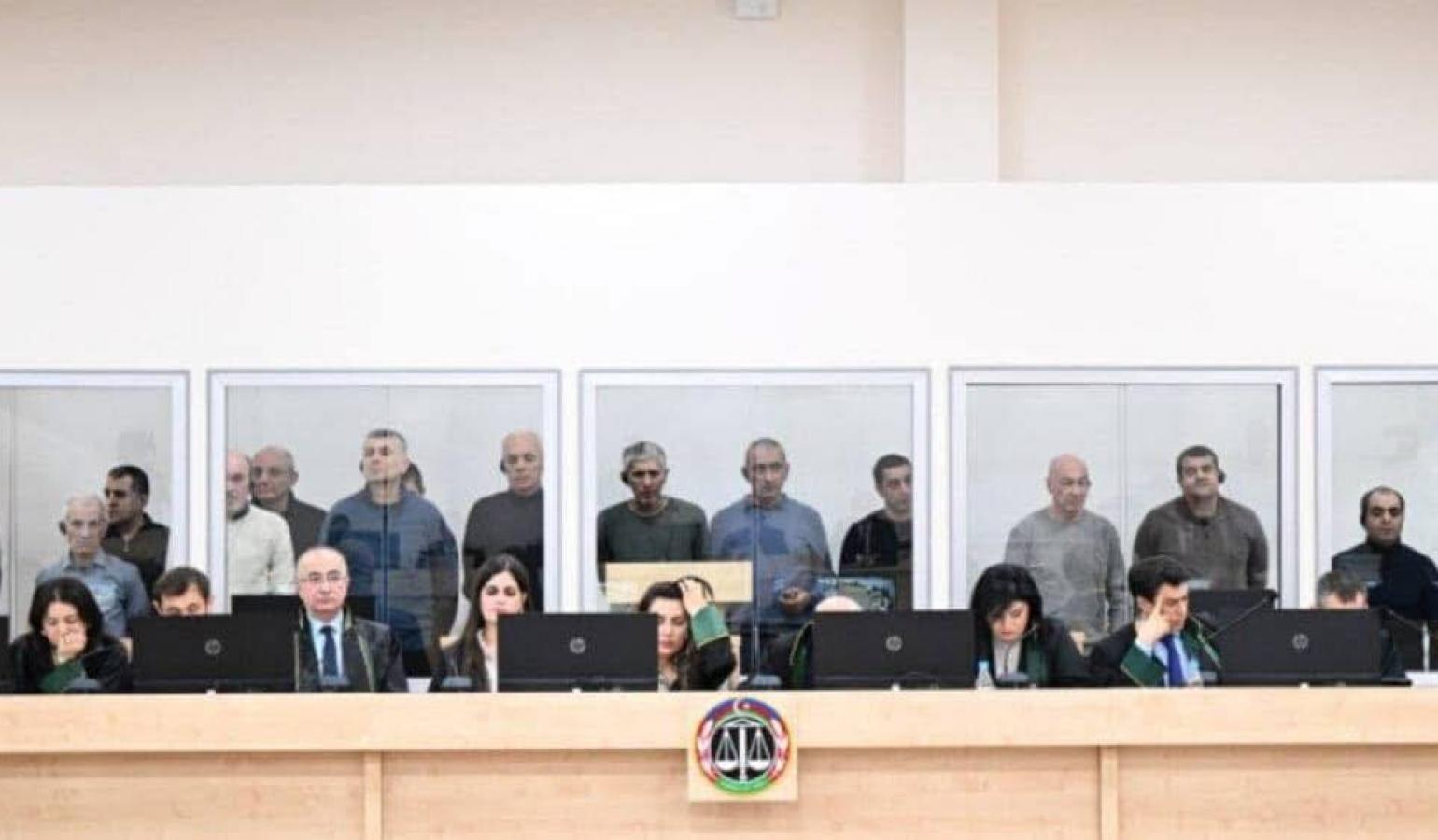
U.S. Vice President JD Vance was recently on an official visit to Armenia. During this time, human rights organizations addressed an open letter to the high-ranking American official, calling on to support the release of Christian Armenian prisoners held in Baku. While raising the issue does not yet mean a swift resolution of the problem, it is nevertheless an important starting point for the process. This was stated in an interview with Alpha News by Siranush Sahakyan, Director of the “International and Comparative Law Center.”
According to Sahakyan, it is significant that the issue is being discussed at a substantive level, regardless of the current position of the President of Azerbaijan. She recalled that similar positions have changed in the past as well. In particular, in the spring of 2021, in the case of Armenian servicemen captured in Khtsaberd, the Azerbaijani authorities presented them as “terrorists” and ruled out their repatriation. Nevertheless, despite the prolonged and phased process, they were eventually released, and Azerbaijani courts did not uphold the terrorism charges, limiting themselves to formal legal qualifications. “This example clearly demonstrates that political statements do not definitively predetermine all solutions. There is a process, there are factors influencing the process, and if they are properly aligned, then, in my assessment, the issue of release is solvable, especially when there are promises of peace and they are actively voiced on various platforms,” said Sahakyan.
According to Sahakyan, in the case of civilians or prisoners of war, solutions may be somewhat simpler, yet they also exist in the case of military-political leaders. “They are political prisoners, and their imprisonment, convictions, and other punitive actions are connected to lawful and permissible activities carried out within the framework of Artsakh’s right to self-determination,” says the human rights defender. International partners also demand the unconditional release of Armenian prisoners without preconditions, not recognizing the legitimacy of those trials.
Sahakyan points to previous cases in which individuals sentenced to long-term imprisonment were released without serving their sentence, and this was not preceded by a pardon, nor were they transferred to the Armenian authorities to serve the unserved portion of their sentence. “This once again proves that in the case of political agreements, judicial acts may not constitute a real obstacle to the release of prisoners. By the same logic, in the case of military-political leaders, the granting of pardons is not mandatory, and release can be organized without such formal acts, according to the same logic that was recorded in the case of other individuals,” said Sahakyan.