
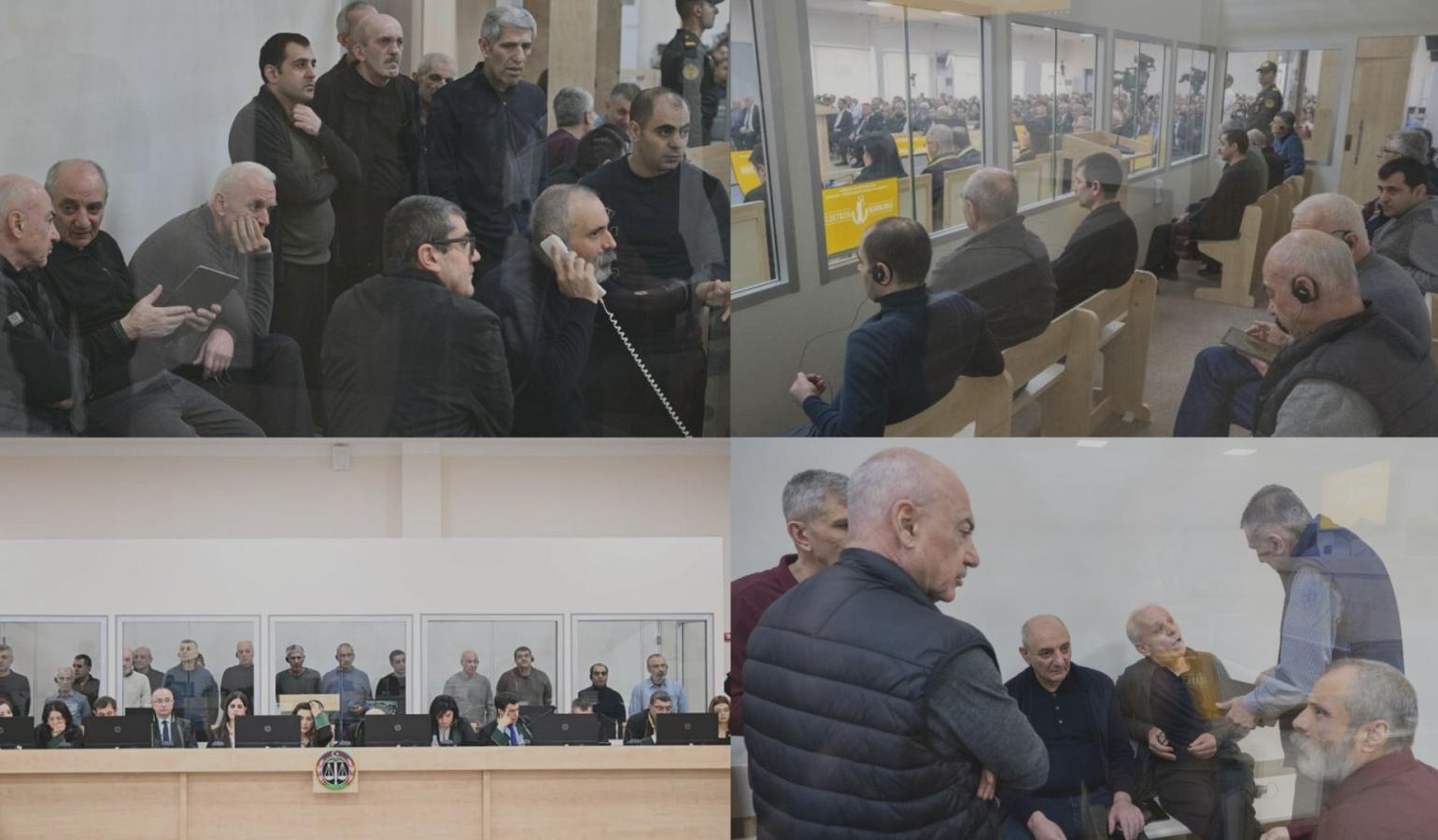
Armenian prisoners held in Baku are in absolute isolation, and Ruben Vardanyan clearly demonstrates this problem. Siranush Sahakyan, Director of the “International and Comparative Law Center,” talked about this in an interview with 168.am, adding that the rights of those individuals cannot be protected. Even local mechanisms, intended to ensure the protection of the rights of persons held particularly in closed institutions, become ineffective in the case of ethnic Armenians. “This is not only our assessment, but also a judicial record of the ECHR, that the Azerbaijani authorities cannot ensure protection measures with regard to ethnic Armenians,” said Sahakyan.
According to the human rights defender, in the case of Armenian prisoners, the only mechanism that could function relatively, and that too only in terms of addressing humanitarian issues, was the Baku office of the International Committee of the Red Cross. However, the office’s activities are currently suspended. During this period, only one visit has taken place at discretion, within the framework of which some humanitarian assistance was provided in the form of transferring hygiene items and other goods.
Siranush Sahakyan also informed that the Azerbaijani authorities, by organizing these illegal trials, also even refuse to deliver the verdicts to the addressees and their family members. “All this once again demonstrates the reality that those trials were falsified, they were political processes carried out for entirely different purposes, and by not providing those verdicts, Azerbaijan is also trying to obstruct international legal protection. And here we find ourselves in the domain of a new violation of rights.”
According to Sahakyan, under these conditions the only path is international engagement, for example, making the Red Cross visits regular as a result of negotiations, which, however, depends on the will of the Azerbaijani authorities. The right to consular visits may also be exercised, the implementer of which is directly the Republic of Armenia, which can also take place through mediation by a third, neutral state.
“With great regret, I note that there is inaction here, and the Republic of Armenia is not exercising its sovereign rights toward its own citizens and is contributing to the formation of this gap - the vacuum. The main burden falls on the shoulders of human rights defenders, who must be able to present the situation to the international community and, against the backdrop of these injustices taking place in the world, make it part of the agenda,” said the human rights defender, adding that when there is no proactive state policy and diplomacy, this process becomes more complicated, as human rights issues have become widespread.
“We are obliged to raise the issues of Armenian prisoners, to achieve their internationalization, and through that path to reach a solution to the problem. Of course, the undertaking of legal protection measures, with the involvement of families, is also under discussion. At this moment I cannot state definitively, but in general terms I note that families, under certain circumstances, may undertake the protection of the interests of our compatriots in Baku and, through their lawyers, file interstate claims against Azerbaijan,” said Siranush Sahakyan.