
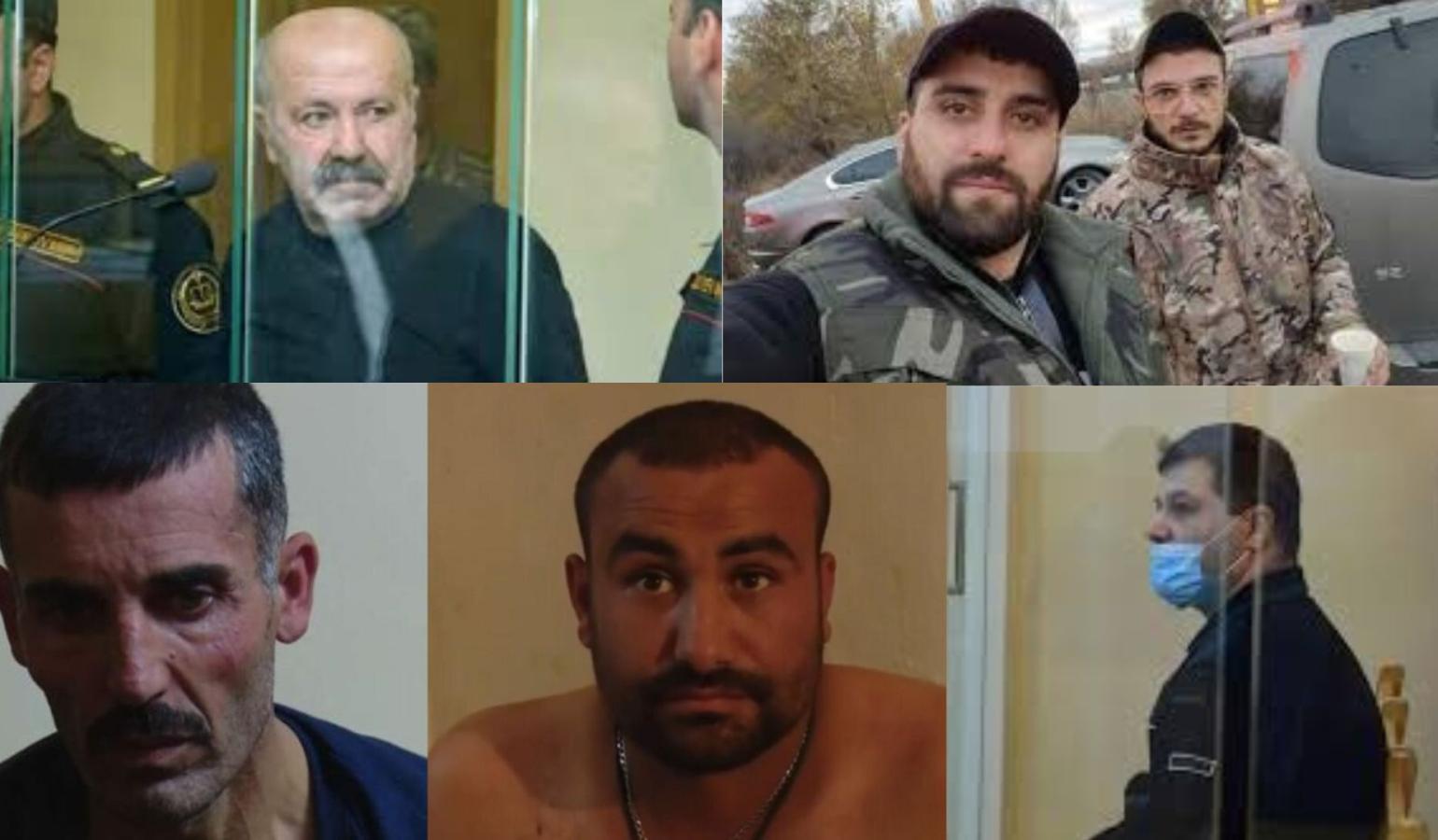
“It is definitely gratifying when four Armenians return home from Azerbaijani captivity, however, it is unacceptable when these issues are resolved on the basis of deals. Given the exclusively humanitarian nature of this issue, it does not receive its final resolution, whereas I believe this is exactly what the Armenian society expects - that causing human suffering in Armenian-Azerbaijani relations should not become a subject of bilateral dealings,” said Siranush Sahakyan, director of the Center of International and Comparative Law, in an interview with Sputnik Armenia, speaking about the returned Armenian captives. The human rights defender expects that all humanitarian issues will be resolved before the signing of documents related to peace.
The return of four Armenian captives - Davit Davtyan, Gevorg Sujyan, Vigen Euljekchyan, and Vagif Khachatryan became known on January 14. The Ministry of Justice subsequently issued a statement noting that, via Turkey, it had transferred to Syria two individuals who had participated in the 44-day war as mercenaries and who had been sentenced to life imprisonment in Armenia.
In an interview with the media, Sahakyan recalled that as early as December 2025 they had publicly stated that there was accessible information indicating that certain Turkish and Syrian groups were interested in the return of Syrian mercenaries. According to the human rights defender, Turkey and Syria envisioned the return of these mercenaries only through resolving the Armenian-Azerbaijani issue.
“These mercenaries are of clear interest to the authorities of Turkey and Syria and in fact have a much higher value than was realized by the Armenian negotiators. In my assessment, if that value had been properly assessed, the Armenian side could have brought back a larger number of captives. Therefore, I consider this to be an unequal, disproportionate deal,” said Sahakyan.
For her, there is a serious legal problem in this deal. The convicted Syrians are mercenaries, whose involvement for the purpose of suppressing the right to self-determination is internationally prohibited. On the other hand, we have Armenian captives who have committed no criminal acts, yet have been subjected to unlawful trials. “Taking this circumstance into account, we can reaffirm that the issue of captives is politicized, and the Azerbaijani side resolves this issue at the cost of certain concessions by the authorities of the Republic of Armenia,” said the human rights defender.
She does not consider it coincidental that the Syrian citizens were extradited on the same day as the return of our prisoners. In Sahakyan’s assessment, in order to conceal the traces of this disproportionate deal, they could have at least created an artificial temporal gap. Yet that did not happen due to the mistrust between the negotiating parties.
To the question of whether it was possible that the released prisoners could have included the former military-political leaders of Artsakh, Sahakyan replied: “Theoretically - yes, practically - no. Even with good negotiations. With regard to the former military-political leadership of Artsakh, the verdicts have not been published, and without those verdicts Azerbaijan would never, under any circumstances, have agreed to extradite them.
According to Sahakyan, the former military-political leadership of Artsakh will be returned at the very end, when all Armenian prisoners are released.
Another 19 Armenian prisoners remain in Baku prisons, including Karen Avanesyan, who was detained by Azerbaijanis in Stepanakert in September 2025.